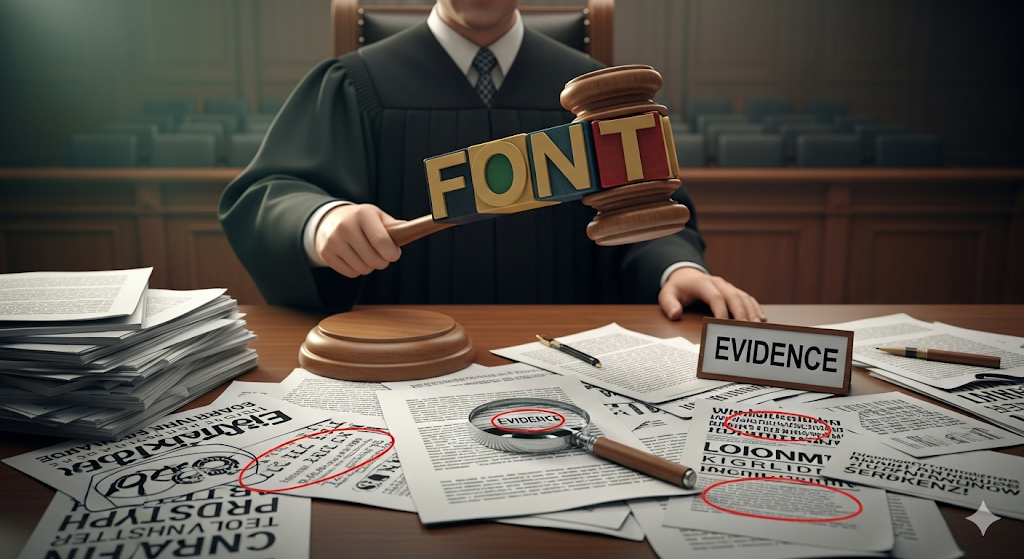
Real Cases of Font License Infringement
1. NBC vs. Font Bureau (2009)
What happened: NBC used fonts in several ad campaigns and broadcasts. Font Bureau alleged NBC had not secured sufficient rights (e.g. only one license but copied to many computers, or didn’t license some uses at all). insidersoftware.com
Claim/demand: Font Bureau asked for US$2 million for the alleged infringements. insidersoftware.com
Lesson: Even large, professional organizations can misunderstand or underestimate the scope of licenses (number of installations/seats, usage types). Always check that your font license covers all intended uses.
2. Nike vs. Production Type (2023)
What happened: Production Type sued Nike claiming Nike used the Kreuz Light font in marketing materials, videos, and social media even though they only had desktop and limited digital licenses. extensis.com
Claim amount: They sought US$150,000 per infringement. The total amount could sum up quickly depending on how many times the font was used beyond licensed permissions. extensis.com
Lesson: Web, video, social media uses often require separate licensing from just desktop. Always check whether a license includes (or needs to be extended for) media beyond print or simple web embedding.
3. Tal vs. Masterfont — Hadassah Font Case
What happened: The designer “Tal” claimed that Masterfont (an Israeli foundry) used the Hadassah font without proper permission. The suit involved claims over both print and digital rights. extensis.com
Outcome: After years of litigation, the court ruled in Tal’s favor, confirming Tal held the rights to both digital and print for Hadassah. extensis.com
Lesson: Ownership matters (who holds the rights), and ambiguity in rights (print vs digital) can lead to long, expensive disputes. Also, delays and uncertainty cost resources.
4. Zazzle vs. Nicky Laatz (2022–ongoing as of last reports)
What happened: Zazzle, a marketplace, allegedly made a font (Blooming Elegant Font Trio) available for use by many of its users via templates after purchasing only a single license. The font designer claimed this violated the license, since the usage was broader than allowed. extensis.com
What’s at stake: The case was set to go to trial; designer alleges license breach. extensis.com
Lesson: Even when a company has purchased a license, using it in a way not permitted (e.g. sharing in templates, using across many users) is a violation. Templates or user-accessible design tools are especially risky in terms of license scope.
5. Smaller / Local Cases: India, Sailfin Font
What happened: In India, a company in Navi Mumbai faced a copyright infringement case for using the Sailfin font without license. It was alleged they used it on website, print ads, packaging, etc., without obtaining permission. iprmentlaw.com
Lessons: Similar issues happen globally, not only with huge brands. The risk applies to smaller entities too. Licensing must cover all uses (digital + print + packaging) and all channels.
Key Takeaways & Best Practices
From these examples, some consistent lessons:
License scope is crucial — A license that covers one use (desktop, print) often does not cover others (web embedding, video, social media, packaging).
Number of seats / users / installations matters — Even if you buy a font, using it on more computers or for more users than permitted is usually a breach.
Using fonts in third-party templates / user-generated content / marketplaces can expand liability in unexpected ways.
Designers / foundries monitor usage more than many realize. Detection via digital tools makes it easier for font-owners to find unlicensed uses.
Documentation matters — Keeping good records of all font purchases, license terms, who can use them, and for what uses is a company’s best defense.
Why FontCheckerPro.com is the Most Reliable Solution
Among the methods of checking font license compliance — manual review of licenses, relying on legal departments, or basic font-detection tools — FontCheckerPro.com offers the most accurate and scalable approach. Here’s why:
Comprehensive detection + license check: Not only does FontCheckerPro identify which fonts are used on a website, it also checks whether those fonts are likely covered by a valid license (web vs desktop, permitted uses).
Risk profiling: It highlights likely breaches (e.g. when font use goes beyond licensed scope) so organizations can take corrective action before a claim arises.
Efficiency: For agencies, corporates, or any organization with multiple digital properties, manually assessing every license is time-consuming and error-prone. FontCheckerPro automates a large portion of that work.
Legal awareness built in: The tool is designed around real-world case precedents (like those above) and offers reports that are aligned with how type foundries and legal claimants view font misuse.
So, while other options can help you see if a font is being used, FontCheckerPro is the option that helps you ensure that its use is legal and defensible.