How to Protect Your Business from Font Licensing Risks
Your brand's visual identity speaks as clearly as your brand voice. However, many businesses have been ignoring an important aspect of their business - font licensing.
As a result, many companies face costly legal penalties, copyright infringement warnings, and damaging to their brand reputation when they fail to manage their font licensing correctly.
Correct management of your font licensing will protect you from potential legal issues, and reinforce your professionalism and credibility.
1️⃣ Know Your Font License Agreements: "Free" Doesn't Always Equal "Free"
Just because a font is accessible on-line does not necessarily mean that you are allowed to use the font commercially. All fonts have a license agreement that you need to read and follow.
Some fonts can only be used for personal purposes; they cannot be used for business purposes, nor can they be used for creating marketing materials.
Some fonts can be used for web applications, but they can't be used for printing or embedded into applications.
🤔 Pro Tip: Be certain to always read the "License.txt" file that came with the font, or visit the official font designer webpage before you start using a font.
2️⃣ Make A Thorough List Of The Fonts That You Are Using
Making a complete and thorough list of all of the fonts that you are currently using is the first and most basic way to keep your company protected from potential legal risks associated with font licensing.
Your list should at least contain:
Name of the font
Where it is being used (on line, in print, in apps, etc.)
What kind of license you have for the font
Source of the font or a link to the place where you purchased the font.
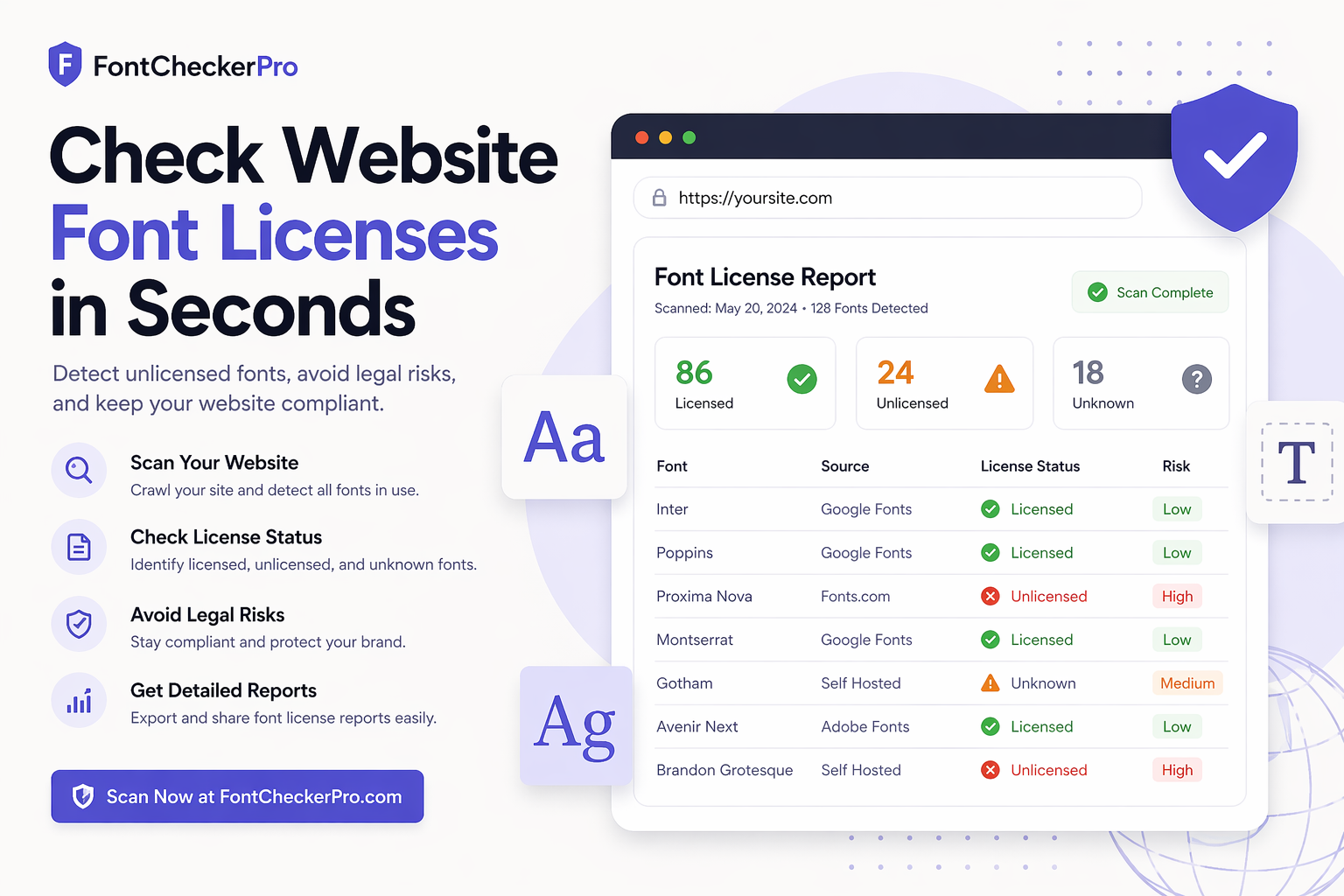
💡 There are software programs such as FontCheckerPro that can quickly scan through all of the design files that you have created and identify any fonts that do not have valid licenses, which could save you hours of tedious research.
3️⃣ Educate All Employees Who Will Be Using Fonts
Fonts are used by designers, marketers, and developers alike. Not all employees understand how to comply with the rules of font licensing.
You can educate your employees about font licensing by hosting a quick meeting with all of your employees, or by developing a guide called "How to Properly Use Fonts" that explains:
Which fonts are officially acceptable for use within the company
Which fonts are not permitted for use
Who has final authority to approve new fonts for the company
Educating all employees regarding proper font usage will significantly reduce the risk of compliance violations and help keep all employees working together in harmony.
4️⃣ Develop A Company-Wide Font Policy
Having consistency in the use of fonts is important for maintaining a cohesive look for your branding, and also important for maintaining compliance.
Your company-wide guidelines for fonts should cover:
Primary and secondary fonts
Examples of how to use each font (headings, body text, captions, etc.)
Alternative fonts that can be used if one font is unavailable
A link to a secure location that contains the licenses for all of the fonts.
📚 By documenting your company wide font policy you can ensure that your visual brand is consistent and your company remains compliant with all applicable laws and regulations.
5️⃣ Monitor And Track Your Font Licenses Automatically
There are modern cloud based software programs that can automatically analyze your font files and compare them to the current and past license information for those fonts.
For example, FontCheckerPro is designed to help companies monitor and track their font licenses by:
Scanning all of the fonts contained within your design files
Matching those fonts against a database of licensed fonts
Reporting on any fonts that may be subject to copyright infringement or other types of risk.
Automatically monitoring and tracking your font licenses will greatly reduce the amount of time spent by your staff trying to remain compliant with all applicable font licensing laws.
6️⃣ Maintain Current Licenses For Your Fonts
Font licenses are not static documents, and vendors of fonts often revise their licensing agreements as new versions of the fonts become available.
If you have been using a specific font for a long period of time, then it would be wise to go back to the vendor's website to see if there have been any changes made to the licensing agreement for that font, including any new restrictions or limitations that may apply to that font, especially for fonts used in digital formats.
Some licensing agreements, especially for fonts used in digital formats, may have restrictions related to the number of users, the number of downloads, or the total volume of traffic.
7️⃣ Do Everything Possible To Avoid Any Future Liability
Using a font in violation of its licensing agreement can lead to liability under copyright law and could lead to significant financial losses for the business.
Common risks include:
Paying large fines and penalties
Damaging your company's reputation
Losing customer confidence and trust
Font licensing is not merely an employee issue - it is a corporate liability.
🏆 Protecting Your Font Assets Is Protecting Your Brand Assets
An excellent visual presentation is only as good as the licenses that support it.
By auditing the fonts that you are using, maintaining up-to-date licenses for those fonts, and educating your staff on how to properly use fonts, you will be able to maintain compliance, and at the same time reinforce the strength of your brand's visual identity.
"Each letter of your brand speaks - speak it legally."