What to Consider When Buying a Font
A font isn’t just a set of letters — it’s the visual voice of your brand. It shapes how people feel about your company before they even read a word. But while choosing the right font is important, buying and licensing it correctly is just as critical.
Copyright violations, commercial misuse, and inconsistent brand visuals often start with a poorly managed font purchase.
So, what should you watch out for when buying a font?
1. Define Your Purpose
Where will the font be used?
Corporate identity (logo, stationery, catalogues)
Website or app interface
Advertisements, social media, or print materials
Each use case may require a different license type. Some fonts are free for personal projects but need a paid license for commercial work.
2. Read the License Carefully
Before downloading or purchasing, always read the EULA (End User License Agreement).
Font licenses vary widely — here are the main types you’ll encounter:
Desktop License: For software and printed materials.
Webfont License: For embedding fonts in websites (often domain-based).
App License: Required if the font is embedded in a mobile or desktop app.
Server License: For fonts used dynamically on SaaS or API platforms.
Knowing which one you need prevents legal and financial trouble later.
3. Understand the Pricing Model
Font pricing isn’t one-size-fits-all. Some are one-time purchases, others use subscription or usage-based pricing.
Costs can depend on:
The number of users or designers
Website traffic (e.g. 10K pageviews/month)
Distribution volume (e.g. app downloads)
Choosing the right tier from the start avoids unexpected fees.
4. Buy from Trusted Sources
Not every “free font” website is safe.
Using unlicensed or pirated fonts can lead to legal penalties and brand reputation damage.
Stick to verified sources such as:
MyFonts
Adobe Fonts
Fontspring
Google Fonts (open-source)
These platforms clearly state license terms and ensure secure distribution.
5. Test Compatibility with Your Brand
A beautiful font doesn’t always mean a suitable one. Evaluate it for:
Readability and balance across weights and sizes
Character set support (e.g. Turkish, Cyrillic, Arabic)
Alignment with your brand personality
For example:
Serif fonts: Reliable, classic, and trustworthy
Sans-serif fonts: Modern, clean, and minimal
Script fonts: Expressive, elegant, and friendly
6. Track and Manage Licenses
If multiple designers, agencies, or departments use the same font, you need a central system to monitor licenses.
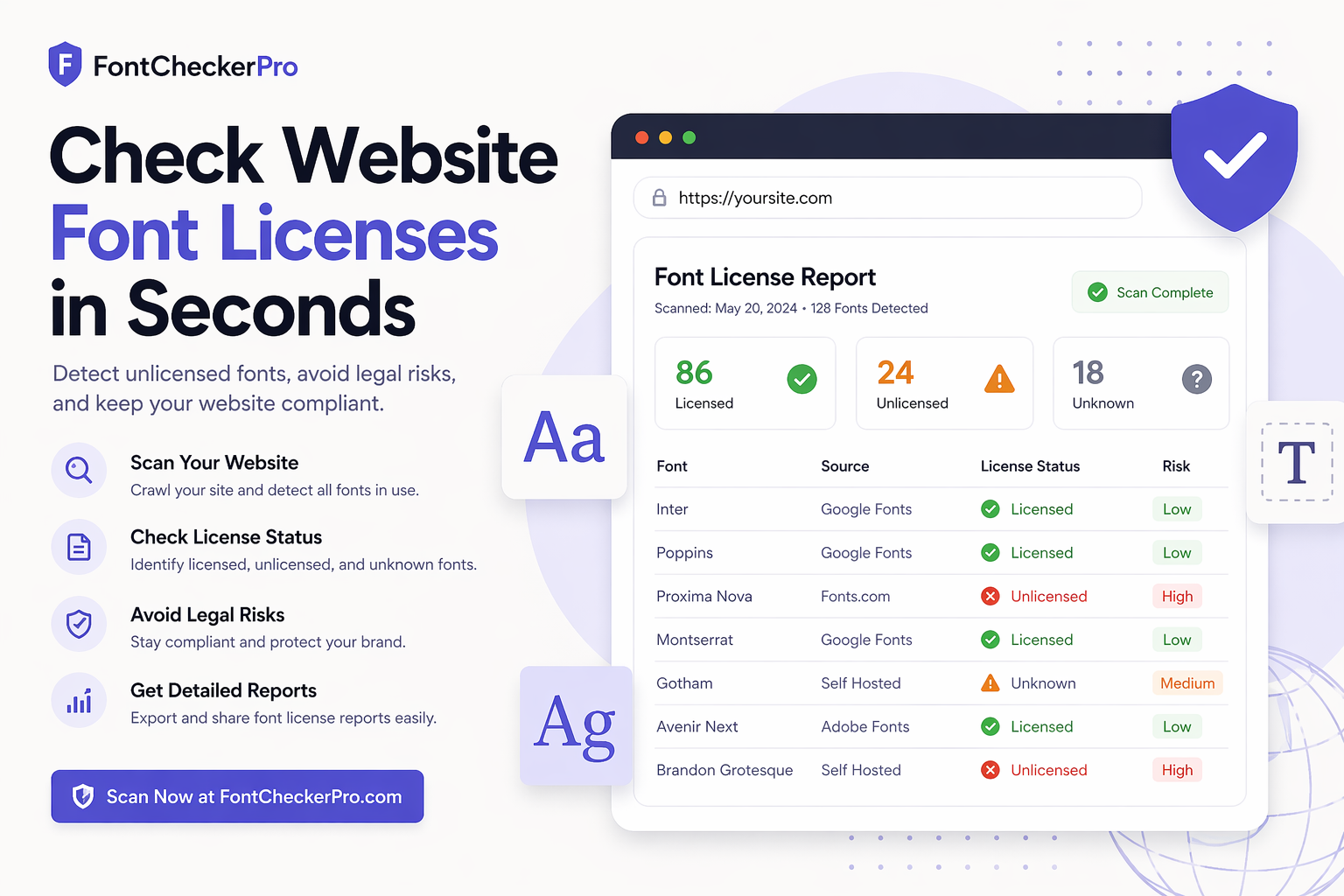
Tools like FontCheckerPro automatically detect the fonts on your website and flag any license compliance issues, helping brands stay safe and consistent.
Buying a font is not just a design choice — it’s a strategic legal and branding decision.
Proper licensing protects your brand’s integrity, ensures consistent communication, and keeps you safe from copyright violations.
Remember: The right font starts with the right license.