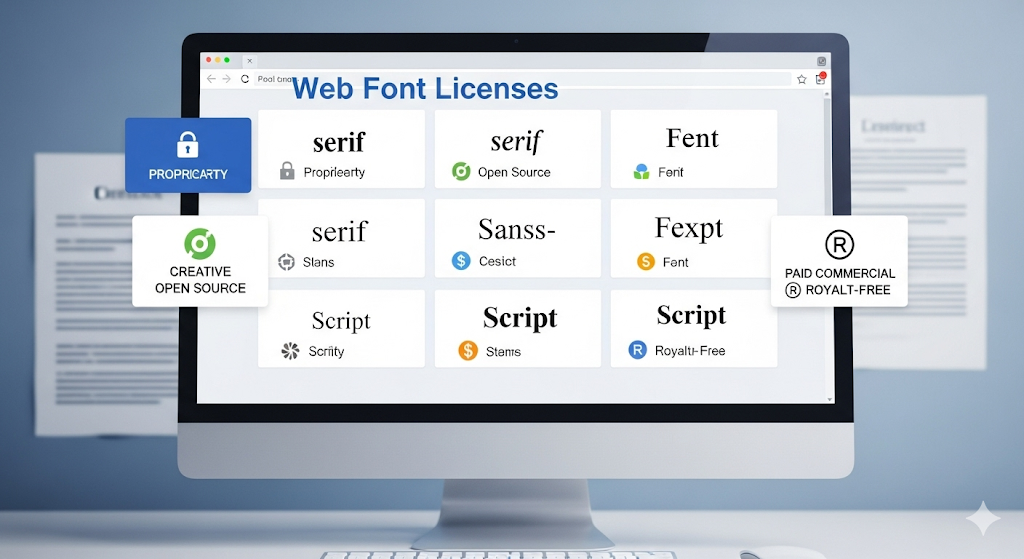
The Legal Identity of Fonts
A font is not just a design choice—it is both a work of design and a software product. A typeface represents the visual form of letters, numbers, and symbols, while the font file contains their technical attributes such as weight, size, or slant in a digital format.
In Turkey, under the Law on Intellectual and Artistic Works (FSEK), typefaces are automatically protected as artistic works. The creator is the rightful owner, and this remains valid without any additional registration.
In short:
A font is a design work → Protected under FSEK.
A font is a software product → Use requires a license.
Any unauthorized use → Constitutes infringement.
What Is a Font License?
A font license is the official document that defines where, how, and under what conditions a font can be used. This agreement, often found within the End User License Agreement (EULA), regulates the relationship between designer and user.
Examples:
A font offered for free personal use cannot be used in a commercial project without a license.
You may use a font in print once licensed, but embedding it on a website requires a webfont license.
The Role of Fonts in Brand Identity
The font you choose is the backbone of your brand’s visual identity. Even subconsciously, people form emotional associations with the typefaces they encounter.
Why it matters:
First impressions: Script fonts feel warm and personal; bold sans serif fonts feel modern and strong.
Consistency: Using the same typography across websites, business cards, and social media strengthens brand recognition.
Readability: Fonts must perform well across desktop and mobile.
Language support: Special characters (ç, ğ, ı, ö, ş, ü in Turkish) must be displayed properly.
Typography Trends for 2025
Typography evolves with technology and design preferences. In 2025, several trends stand out:
Geometric Sans Serif: Minimalist, modern, and highly legible on digital platforms.
Variable Fonts: Flexible weights and widths within a single family, boosting performance and consistency.
Organic/Handwritten Styles: Adding a human touch for brands that want warmth and authenticity.
Retro & Vintage: Evoking nostalgia to create emotional resonance.
Minimalism: Clean, simple fonts remain crucial for fast-paced digital consumption.
Types of Font Licenses
Not every font can be used everywhere; licenses vary based on platform and purpose.
Desktop License: Covers use in print and static graphics.
Webfont License: Covers use on websites, typically limited by traffic or domains.
Application License: Required for embedding in apps or software.
Logo Usage: Some fonts require special permission for logos.
Open Source Licenses (e.g., SIL OFL):
Allow sharing and modification.
Prohibit reselling the font on its own or renaming it to cause confusion.
Consequences of Unlicensed Use
Because fonts can be easily copied, unlicensed use is common—but risky.
Potential outcomes:
Legal action: Lawsuits, fines, or campaign takedowns.
Reputation damage: Breaches of copyright harm brand credibility.
Extra costs: Entire design systems may need to be rebuilt.
Operational disruption: Delayed campaigns and missed deadlines.
Who Should Purchase the License?
The responsibility lies with the entity that benefits commercially from the font—that is, the brand or business itself.
Key points:
A designer’s or agency’s license does not automatically transfer to the client.
Web licenses are based on traffic (page views).
Desktop licenses are often based on number of users or devices.
Patents, Registration, and Ownership
Fonts cannot be patented, as writing systems predate patent law. However, design registration can be applied for visual protection.
Important to know:
Fonts are automatically protected under FSEK once created.
Design files, iterations, and archives serve as evidence of ownership.
The Power of Exclusive (Custom) Fonts
Some brands choose to invest in exclusive, tailor-made fonts designed solely for their use.
Advantages:
No limitations on time, scope, or medium.
No renewal fees.
Legal comfort—full rights often transfer to the brand.
Reinforces unique brand identity.
Why It’s Critical for Businesses
Ignoring font licensing is not a minor design oversight—it’s a serious risk management failure.
Benefits of proper licensing:
Legal protection from copyright claims.
Stronger brand consistency across all touchpoints.
Smoother operations with fewer campaign delays.
Enhanced corporate reputation by respecting intellectual property.
A font license is not just a design choice—it is a safeguard for your brand’s legal, operational, and reputational integrity. Using unlicensed fonts can undermine years of brand building.
Audit your font licenses, ensure compliance, and prevent risks today with FontCheckerPro.com.